Building an ADU in Massachusetts has gone from a design vision into a real and achievable project. A new state law that took effect in early 2025 removed one of the biggest roadblocks that kept homeowner ADU plans on hold for years, and homeowners across the South Shore are starting to take notice.
Still, knowing the law is only part of the picture. Before breaking ground, most homeowners want to understand what adding an accessory dwelling unit on the South Shore realistically costs, how long it takes, what the permit process involves, and how to find the right team to see it through. Oak DD has put together a complete homeowner’s guide built around those questions.
Whether you are planning for a family member’s space, exploring rental income, or simply looking to get more out of your property, this guide outlines what you need to know.
Thinking about adding an ADU? Start Your Project with Oak.
Understanding the 2025 ADU Law in Massachusetts
The Affordable Homes Act, signed in 2024 and effective February 2025, changed how Massachusetts regulates ADUs at the local level. For homeowners, this means if you own a single-family home in Massachusetts, you can now build one ADU on your property without needing approval from a local zoning board. There are also no hearings, no variances, no neighbors voting on whether your project moves forward.
For years, towns across the state had their own rules around ADUs, and many of those rules made approval unpredictable or nearly impossible. The Massachusetts ADU law changes that and sets a statewide standard that local zoning cannot override, as long as the project meets the qualifying conditions for an ADU in Massachusetts, including:
- The ADU must be on the same lot as an existing single-family home.
- It cannot be larger than 900 square feet.
- It cannot be rented out on a short-term basis through platforms like Airbnb or Vrbo.
Your town can still set standards around things like setbacks or how much of the lot can be covered by structures, but those rules cannot be used to block a project that qualifies and meets all set standards.
Rethinking Your Space with an Accessory Dwelling Unit
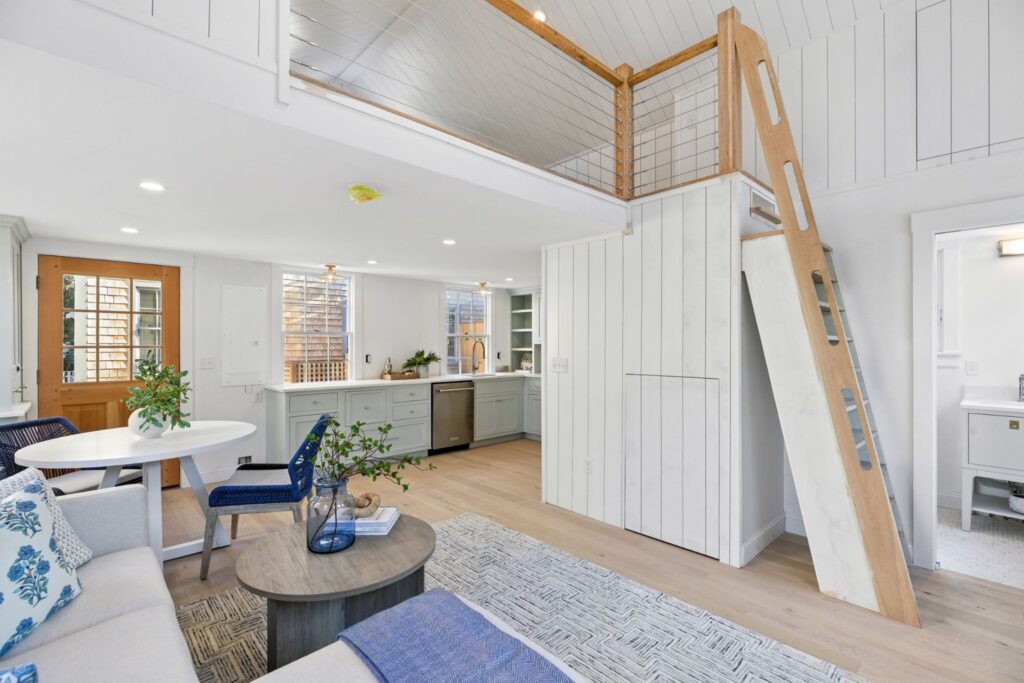
An accessory dwelling unit is not a one-size-fits-all feature for every home. It is a separate living space, and how it looks on your property depends on your goals, your lot size, and your existing home. Understanding the categories will help you determine which one makes the most sense for your home and lifestyle – before design planning and decision-making begins.
| ADU Type | What It Is | Best For | Cost Range |
| Detached ADU | A stand-alone structure on the same lot, fully separate from the main home | Rental use, maximum privacy, and long-term independence from the main home | Typically highest |
| Attached ADU | Shares a wall with the main home; could be a converted garage, new addition, or side-by-side build | Homeowners who want connection to the main house with lower construction complexity | Mid-range |
| Interior | Repurposes existing space within the home, such as a finished basement or bonus room above a garage | Homeowners who already have usable square footage and want the most budget-accessible path | Typically lowest |
Each ADU format comes with its own cost profile, and knowing which one fits your property is the first step toward building a realistic budget.
ADU Cost in Massachusetts: What to Expect
The answer to how much an ADU cost Massachusetts is that it depends on the type of unit, the condition of the site, the level of finish, and local labor costs. Having a realistic cost range from your contractor helps you decide early whether a project aligns with your goals, resources, and future plans.
Interior ADUs typically start around $80,000 and can reach $175,000 depending on scope, and when the existing space is structurally sound and accessible. An attached ADU usually falls in the mid-range, often between $150,000 and $275,000, and a detached ADU built from the ground up commonly ranges from $200,000 to $400,000 or more, depending on its size and layout complexity.
When building an accessory dwelling unit in Hingham or any South Shore community, the full project budget should account for design and architecture fees, permit costs, and any required utility upgrades. It should also include other site work, such as grading, drainage, or new utility connections for aging homes. Working with a design/build firm that handles both design and construction keeps the budget aligned from the start.
How to Build an ADU in Massachusetts
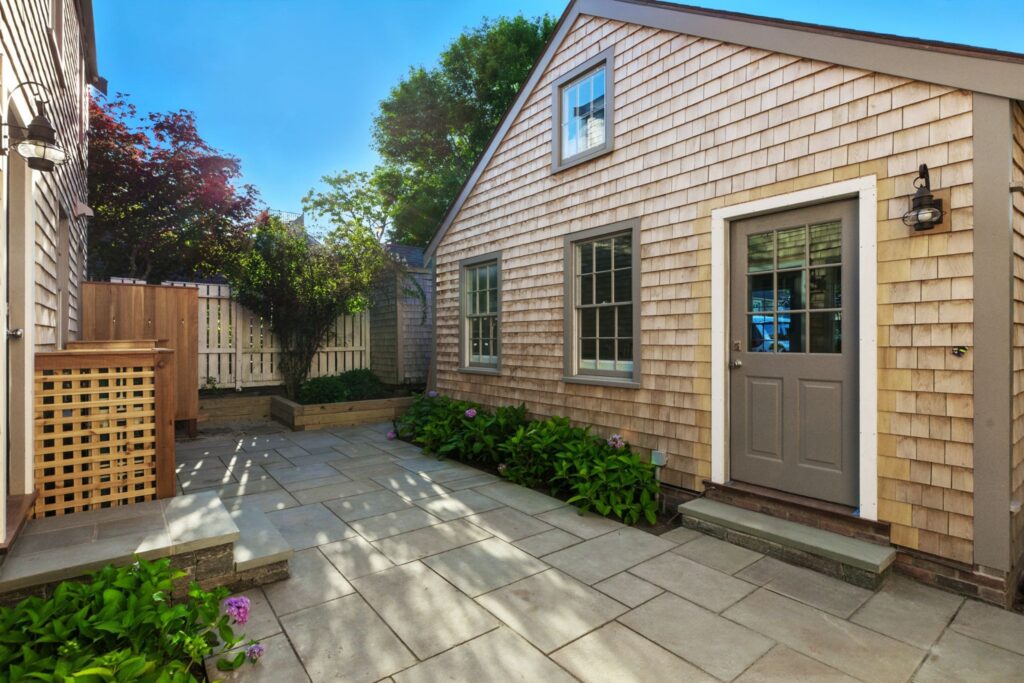
Knowing how an ADU project is completed helps homeowners plan ahead and prevent project delays. While every property is different, most Massachusetts ADU builds follow a similar path from the initial conversation to the turnover of the finished space.
Site Feasibility Assessment
A site visit from a trusted ADU contractor identifies what your property can support and what local conditions look like, including lot dimensions, setbacks, soil conditions, utility locations, and existing structures. This initial step helps shape design planning and everything that follows.
Design and Planning
Architectural design and planning are developed next, and include the homeowner’s goals, budget, and site conditions. When both design and construction phases are managed by the same firm, the homeowner benefits from real-time cost input throughout, which reduces surprises during the construction stage.
Permit Processing
Stamped architectural drawings and a building permit application are submitted to the local building department. Your ADU builder coordinates with the town to address any questions or requested revisions. Project timelines may be a bit fluid, so adding in buffer time within the project helps navigate through any delay in permit processing.
ADU Construction
After the layout and permits have been approved, the contractor now begins site preparation, foundation creation, framing, mechanical and electrical rough-in, insulation, and interior finishes in sequence. At each milestone, required inspections will be conducted to make sure the plan is followed thoroughly.
Certificate of Occupancy (CO)
Once the finished space passes local final inspections, the local building department issues a certificate of occupancy. For homeowners, this means the unit is officially livable!
From design planning through move-in, most accessory dwelling units on the South Shore take between 9 and 18 months, depending on the scope of work and local permit processing times. Having a cohesive, design-and-build integrated team manage your project from start to finish helps keep communication clear and the project schedule realistic.
ADU Permit Massachusetts: What Homeowners Should Know
Even with Massachusetts’ 2025 ADU law, a building permit is still required to build an ADU. By-right means local zoning boards cannot block a compliant application. It does not mean the project skips the permitting process entirely.
A typical application for ADU permit Massachusetts includes submitting stamped architectural drawings, a site plan showing the ADU’s placement in relation to your property lines, and documentation of compliance with state and local building codes. Once submitted, the local building department reviews the documents, and turnaround times may vary by municipality. In some towns like Hingham, review takes two to three weeks, while other towns may run from two to three months.
Local inspections are also required at key stages during construction, including foundation, framing, rough electrical and plumbing, and final inspection. Your property builder accounts for scheduling and coordinating each inspection at their given stage. An experienced team with direct experience working with South Shore municipalities understands how local building departments operate, which makes a big difference when it comes to keeping a project on schedule.
Why More Homeowners Are Considering ADUs on the South Shore
Massachusetts’ South Shore region has a unique mix of characteristics that make ADUs a natural fit. Properties here tend to sit on larger lots than those in Boston. Many homes, especially in towns like Hingham, Duxbury, Scituate, and Norwell, have ideal lot size, site conditions, or underutilized structures like detached garages, finished basements, or oversized attics that translate well into potential spaces for an accessory dwelling unit.
Multigenerational living is also one of the most common motivations in the area. Homeowners who want to keep aging parents close, or provide independent space for adult children, are finding that an ADU offers a practical option between full cohabitation and a separate property. For some, the primary driver lies in long-term rental income in a market where demand for well-maintained rental housing remains steady.
Beyond the practical reasons, an ADU also adds measurable value to any property. When designed and constructed properly, it increases the functional capacity of your home without compromising its character, space, and function.
Massachusetts ADU FAQs
Is building an ADU worth it?
Yes, an Accessory Dwelling Unit (ADU) is a strong investment with high returns from the initial investment, rental income, and increased property value. In Massachusetts, ADUs add significant value to single-family properties, particularly in high-demand, high-cost areas like Hingham and neighboring communities.
Can I rent out my ADU in Massachusetts?
Yes, long-term rentals for ADUs are permitted under the 2025 Massachusetts ADU law, but short-term rentals listed on vacation platforms, like Airbnb, are excluded from the by-right provision. Homeowners planning to rent should also review any applicable local rental regulations, as requirements can vary by municipality.
Can I build an ADU on my property in Hingham or on the South Shore?
Yes, adding an accessory dwelling unit to South Shore properties is increasingly supported under updated state guidelines. But each town, including Hingham, has its own local zoning details that must be reviewed before moving forward with any ADU project.
Is building an ADU worth it?
Yes, an Accessory Dwelling Unit (ADU) is a strong investment with high returns from the initial investment, rental income, and increased property value. In Massachusetts, ADUs add significant value to single-family properties, particularly in high-demand, high-cost areas like Hingham and neighboring communities.
Can I rent out my ADU in Massachusetts?
Yes, long-term rentals for ADUs are permitted under the 2025 Massachusetts ADU law, but short-term rentals listed on vacation platforms, like Airbnb, are excluded from the by-right provision. Homeowners planning to rent should also review any applicable local rental regulations, as requirements can vary by municipality.
Can I build an ADU on my property in Hingham or on the South Shore?
Yes, adding an accessory dwelling unit to South Shore properties is increasingly supported under updated state guidelines. But each town, including Hingham, has its own local zoning details that must be reviewed before moving forward with any ADU project.
Plan a Space That Supports How You Live
An ADU is not just an addition to your property. It is a considered decision about how you want your home to function, both now and in the years ahead. The 2025 Massachusetts ADU law has made that decision more accessible for South Shore homeowners, removing the barriers that kept good projects from moving forward.
Getting there still takes the right process and the right team. From early site planning through permitting and construction, every phase shapes how the completed space will look and feel to live in. That is where having design and construction together under one team makes a real difference.
If you are ready to explore what an ADU could look like on your property, we welcome the conversation. Oak brings the same thoughtful, start-to-finish approach to ADU projects that we bring to all our builds on the South Shore and the Islands.
Let’s Talk About Your ADU Project